
Therapy Services
Every child grows differently. Some need support in one area. Others benefit from coordinated care across disciplines. We help you decide what your child needs. At Kids-N-Motion every therapy is connected, intentional and cohesive.




↓
Occupational Therapy
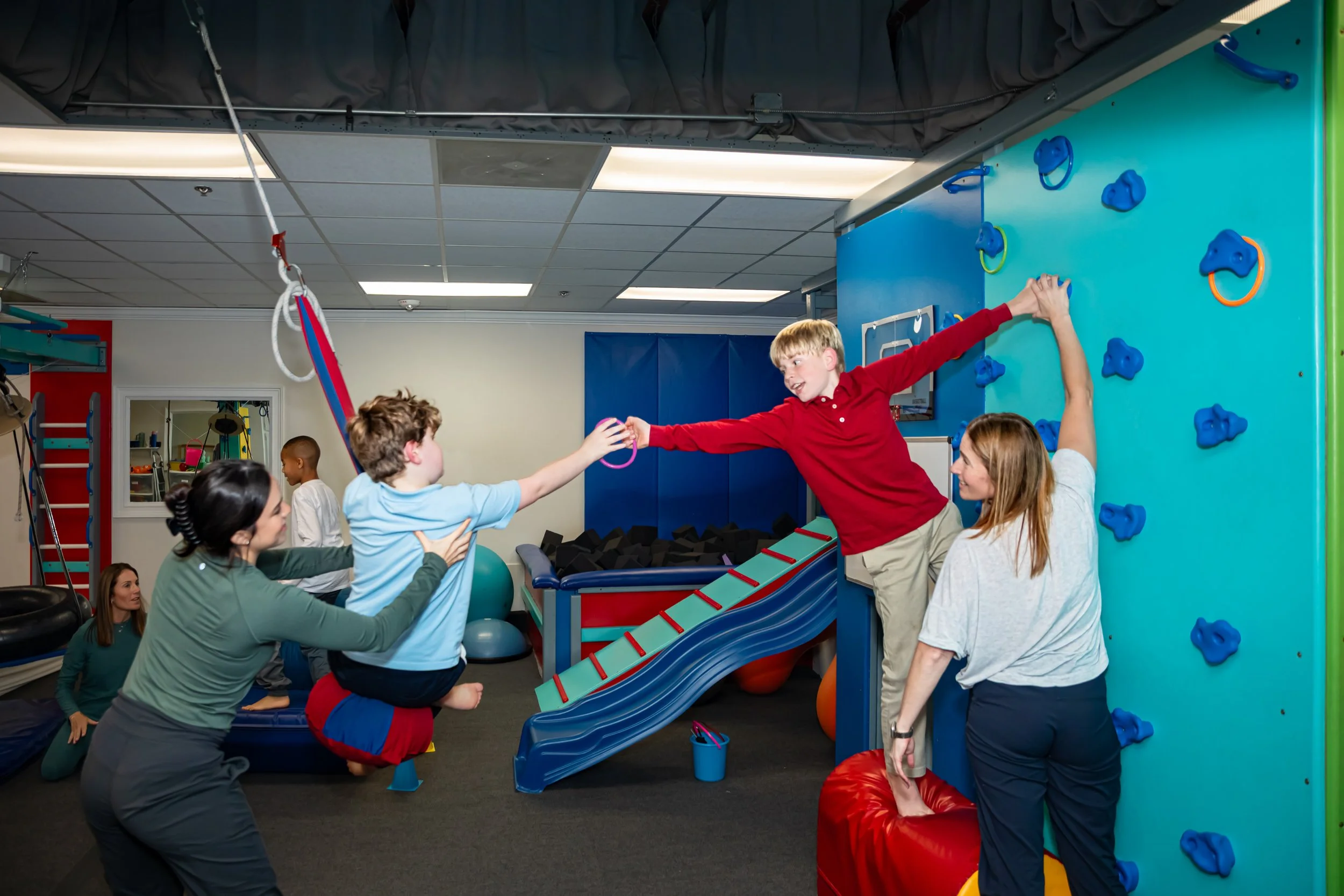
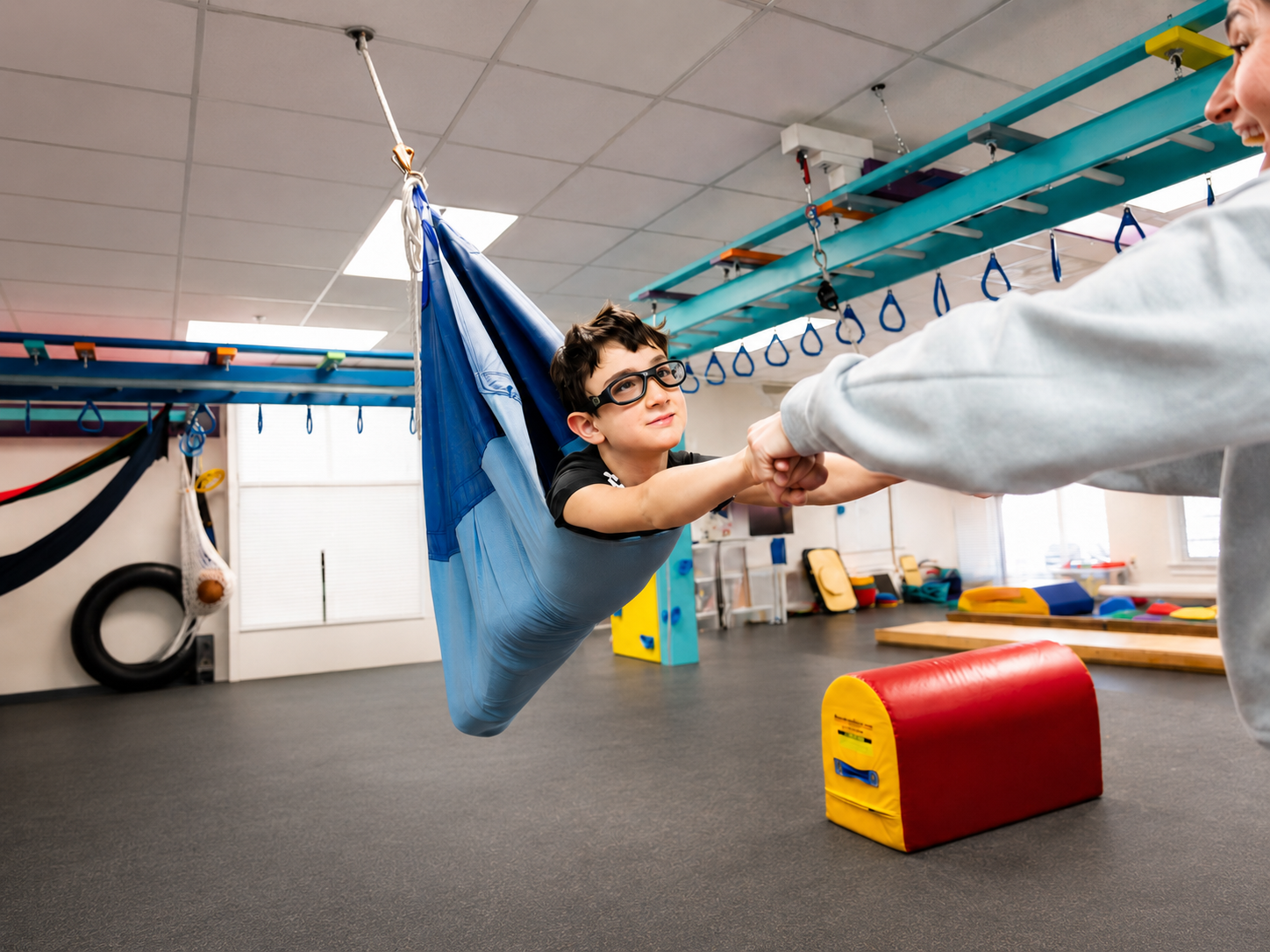
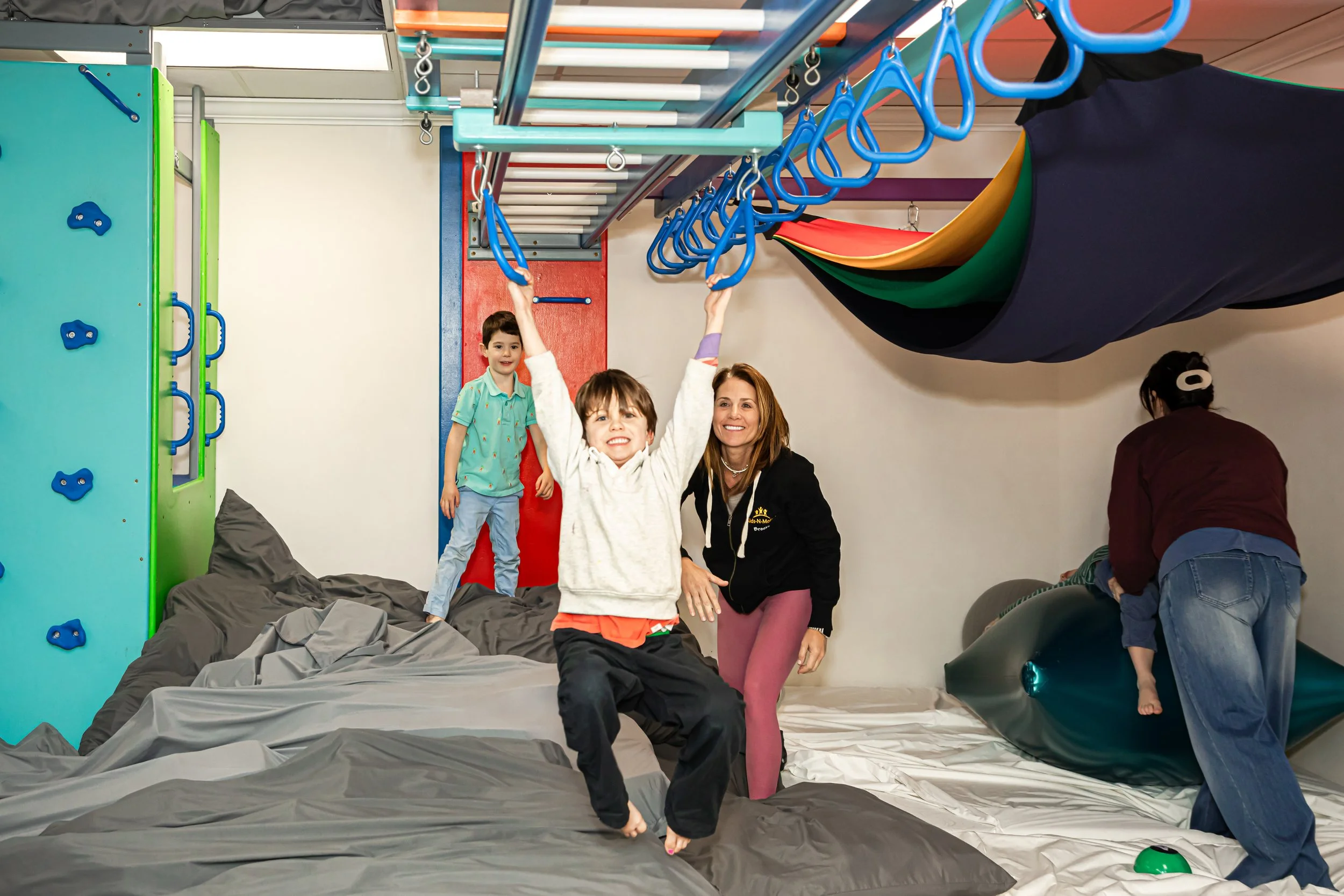
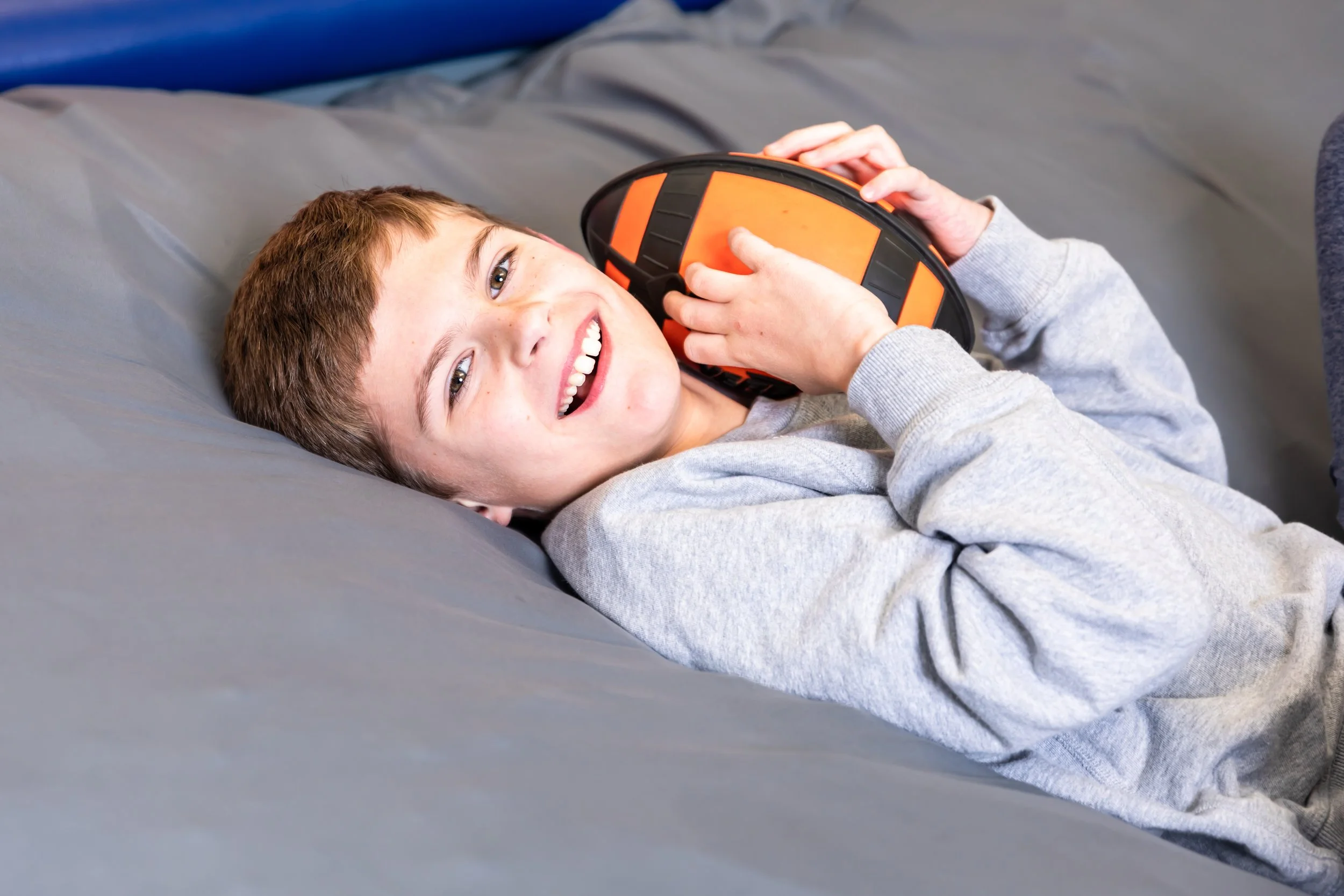
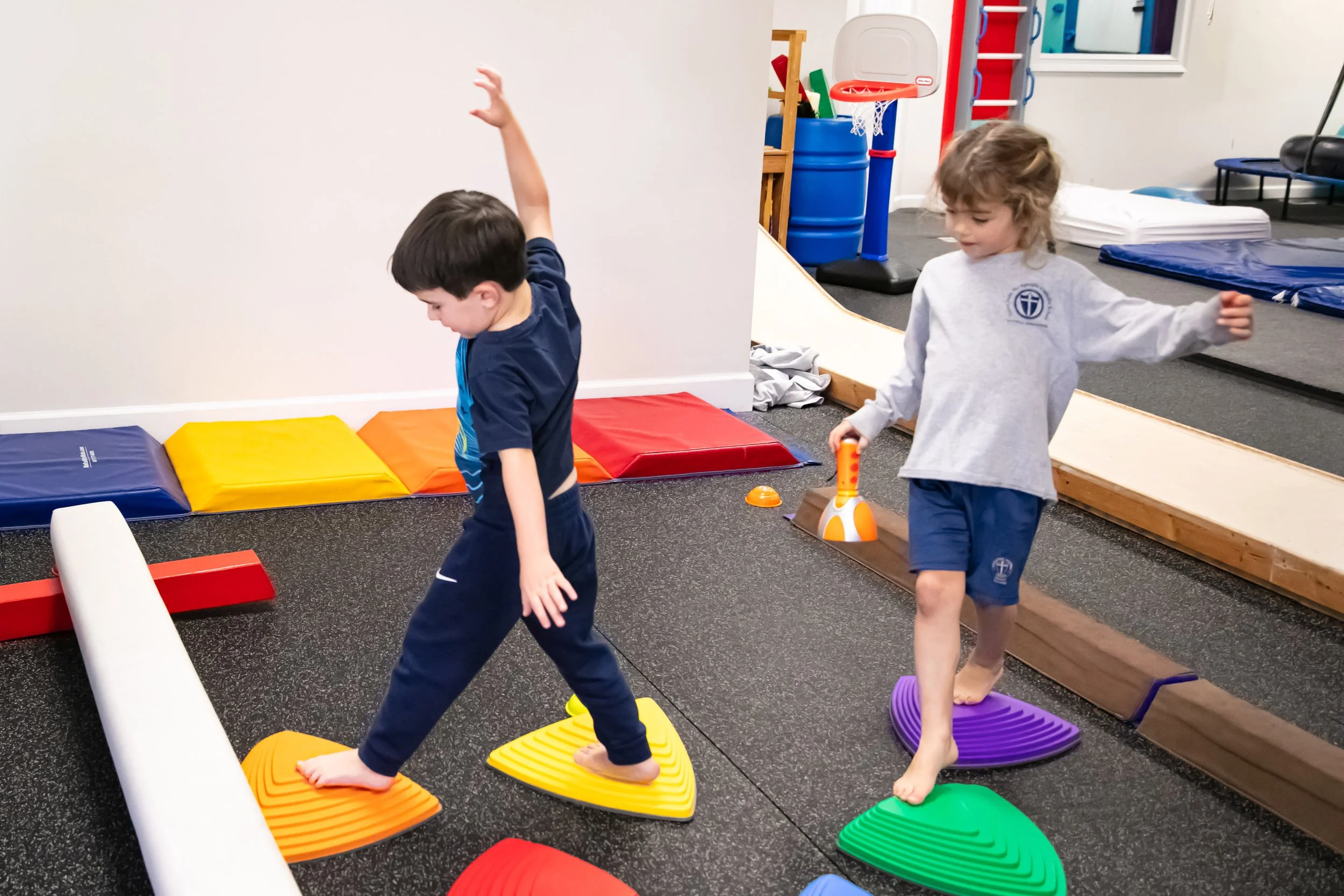
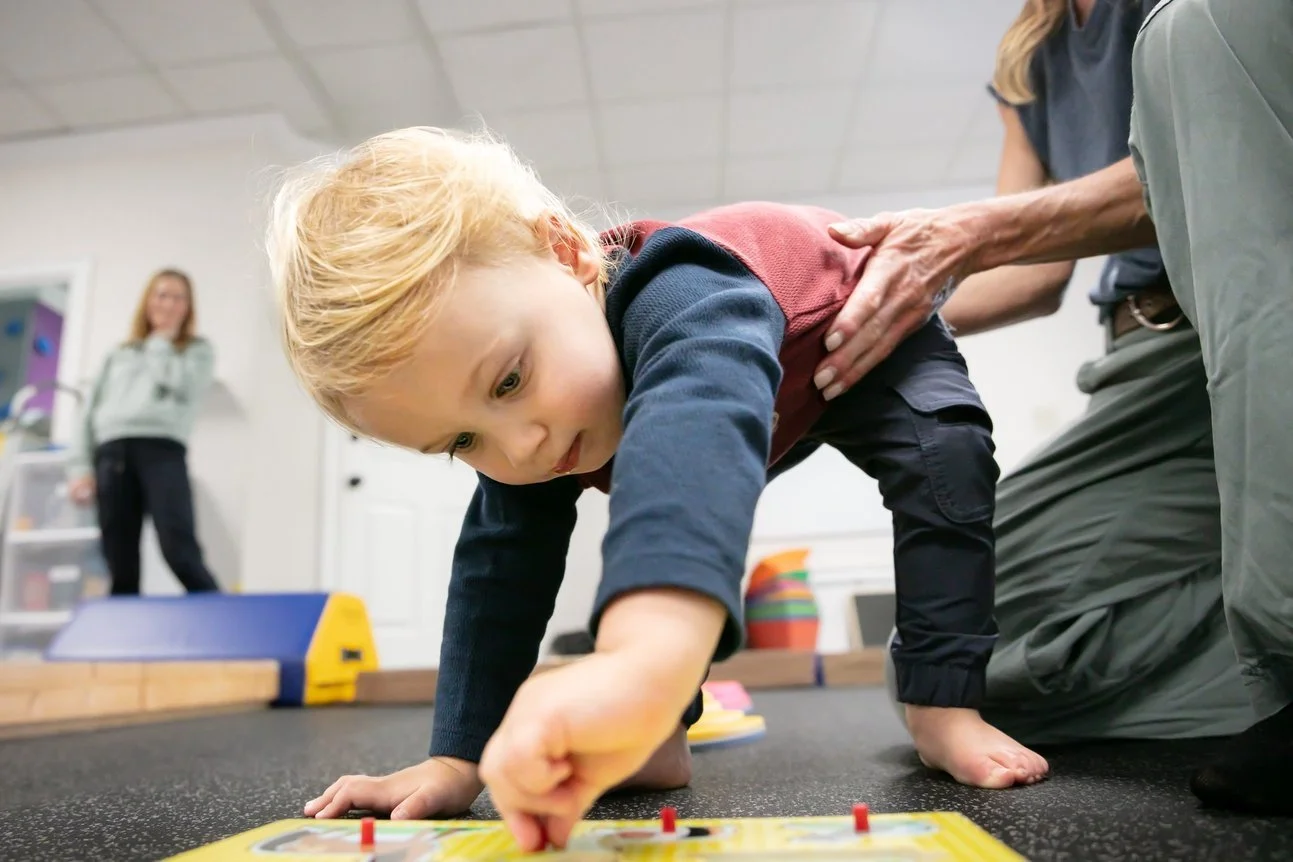
At Kids-N-Motion, occupational therapy helps children build the skills they need for everyday life through movement, play, regulation, and connection. We support children from infancy through the teen years, helping them feel more confident in their bodies, emotions, and interactions.
-
Emotional regulation, sensory processing, motor planning, reflex integration, coordination, balance, attention, body awareness, social interaction, fine motor skills, visual-motor skills, and visual processing.
-
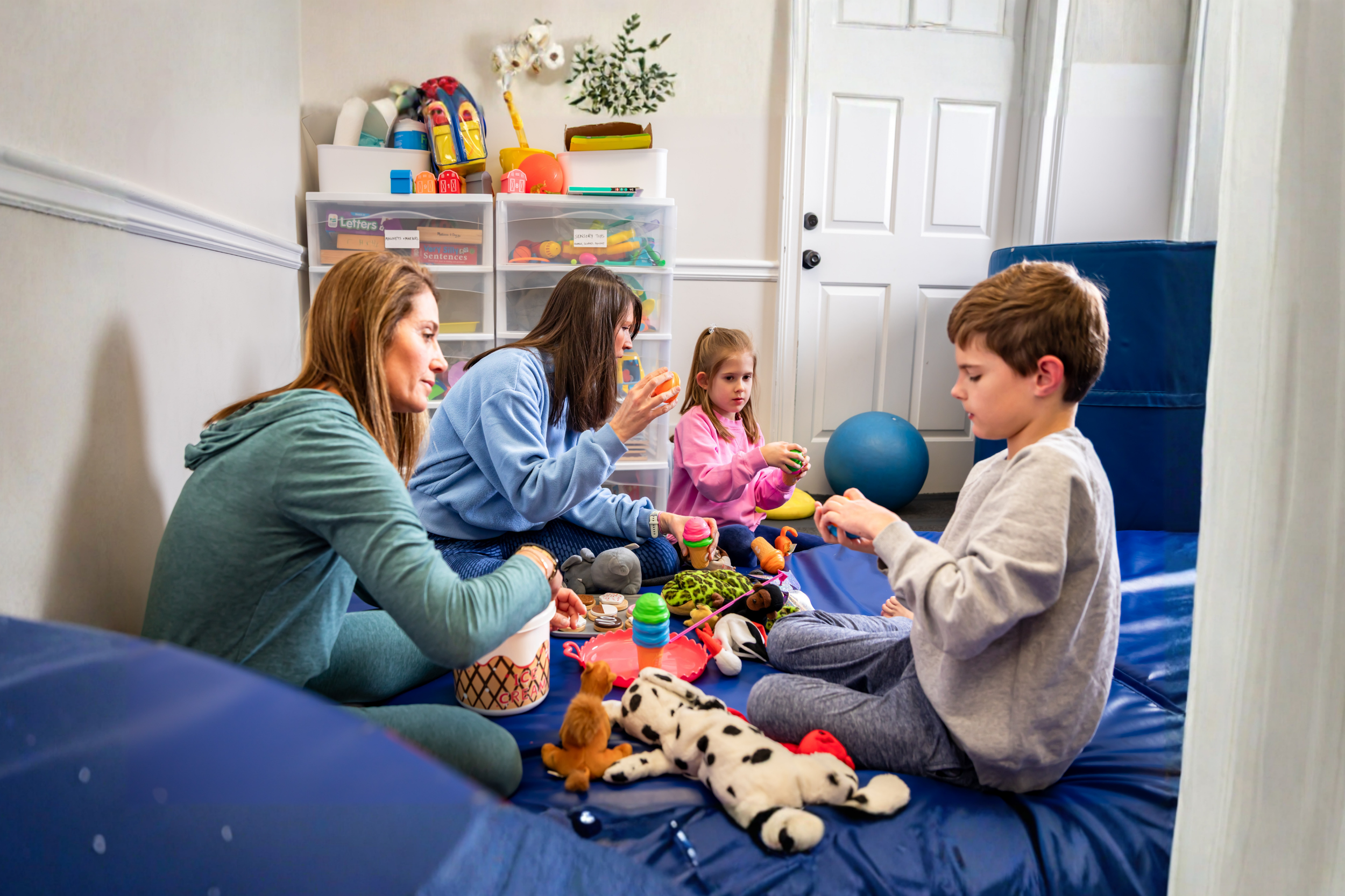
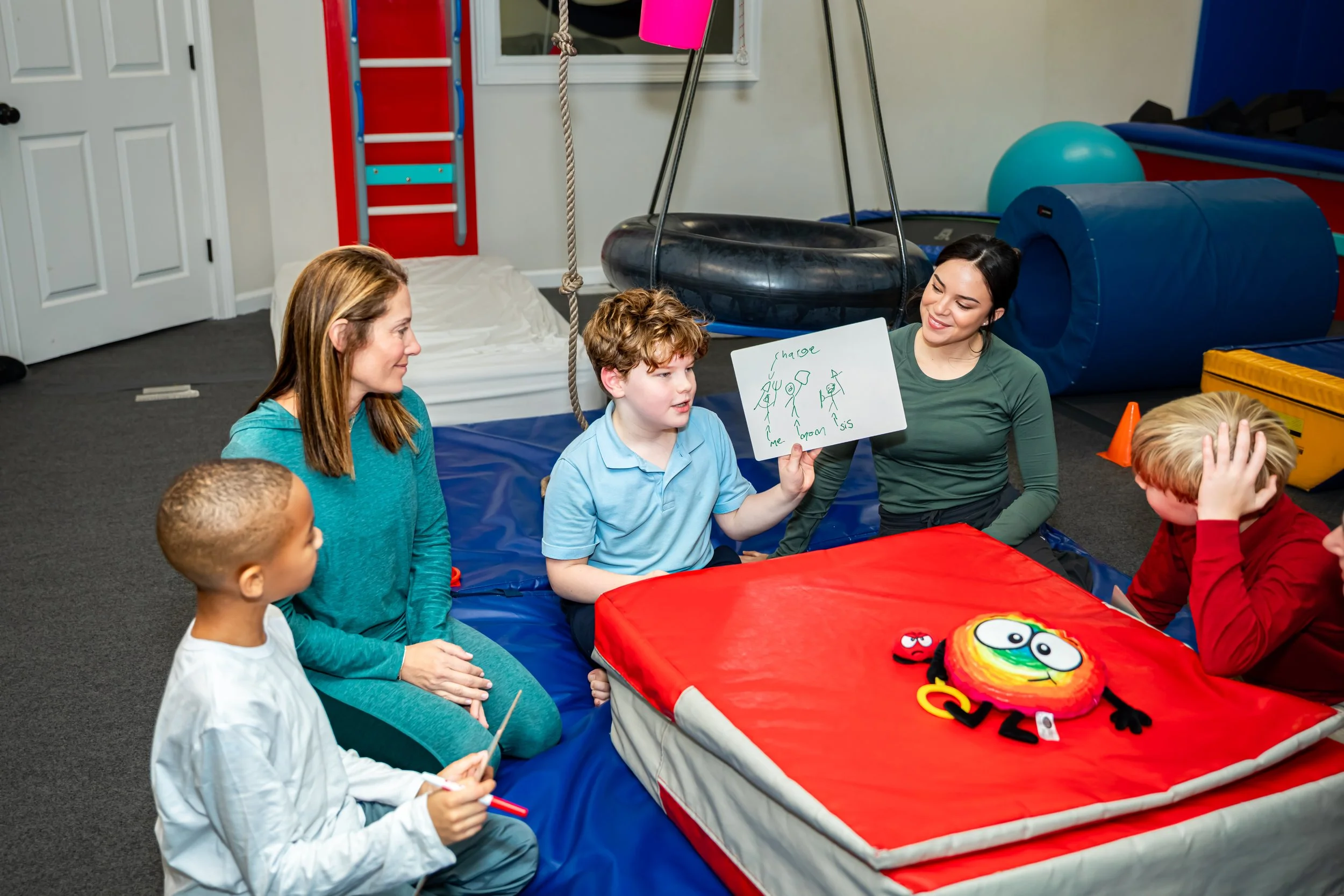
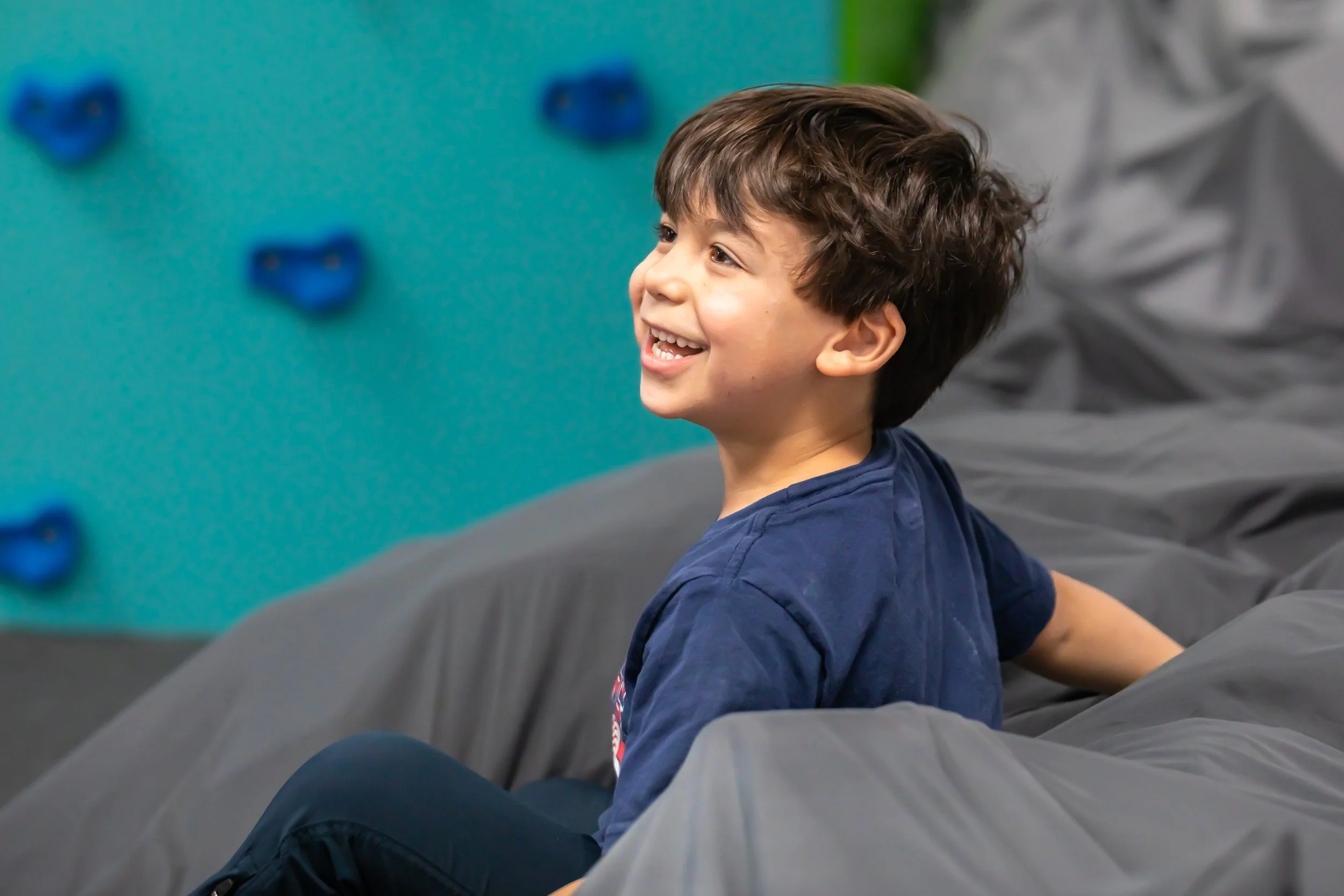
Children work one-on-one with their therapist while also having opportunities to engage with same-aged peers. Therapy is designed to create natural moments for movement, communication, emotional regulation, social growth, and problem solving.
-
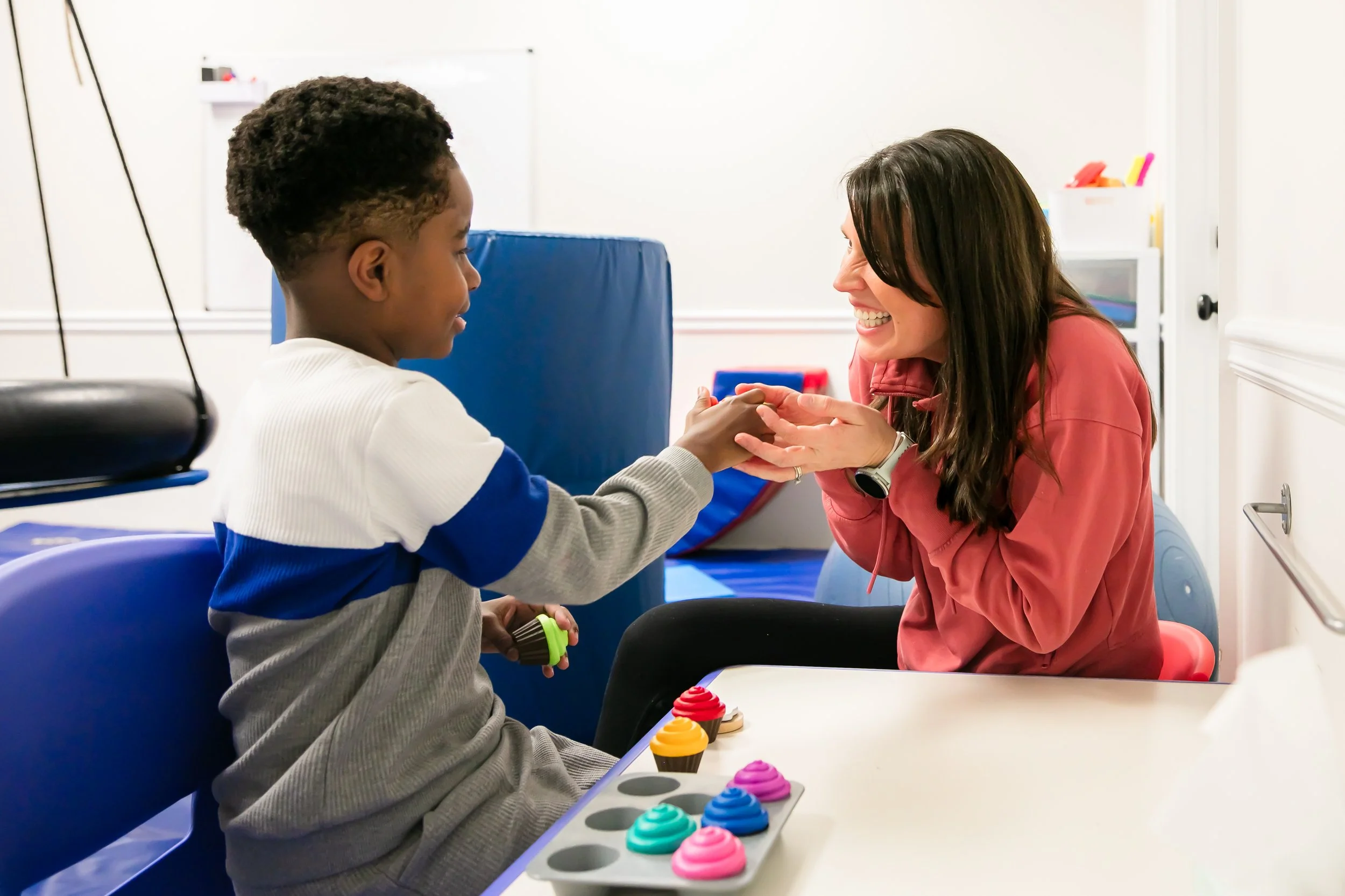
Our occupational therapists collaborate with speech, play, and ABA therapists to support the whole child. Parents are also an important part of the process.
-
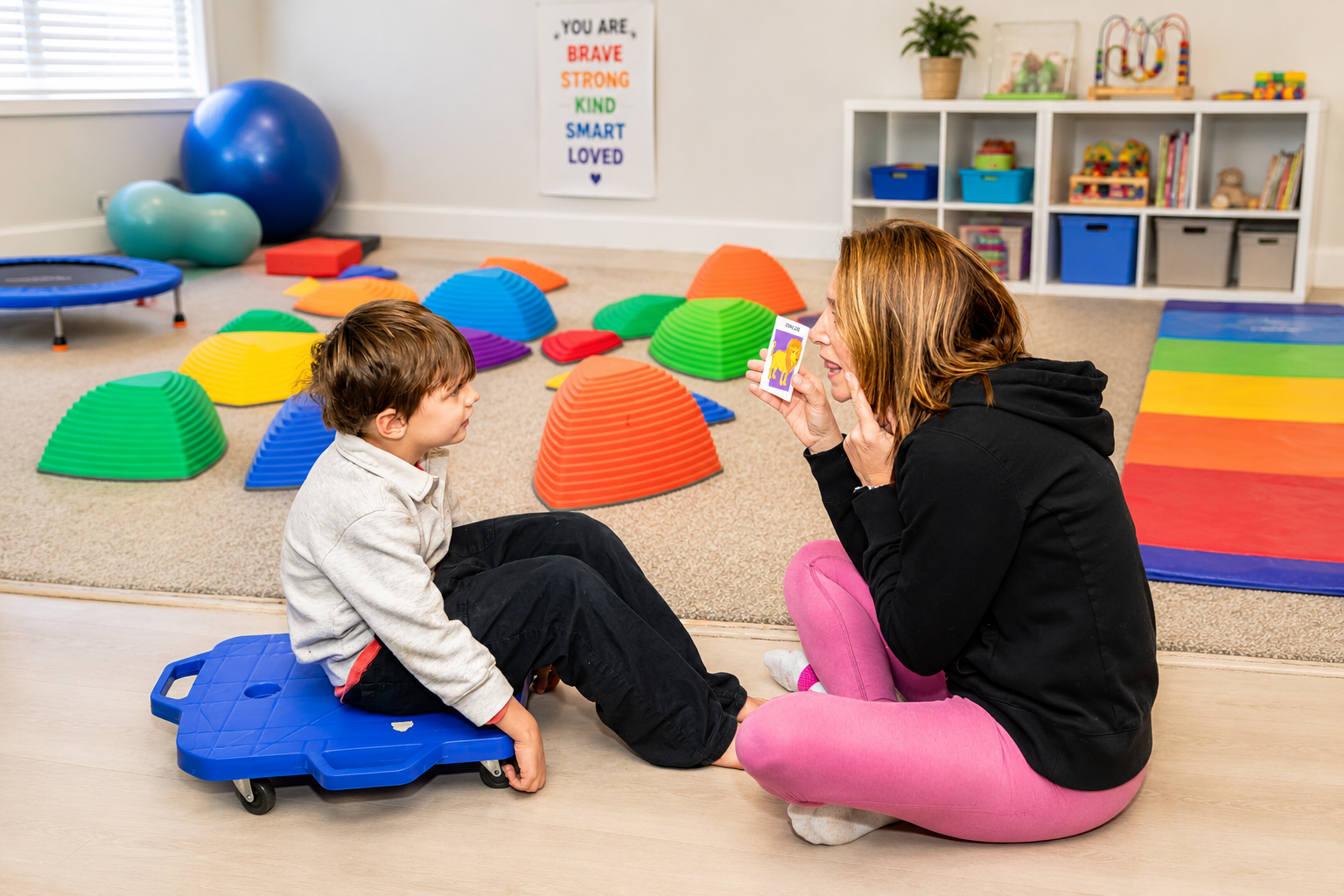
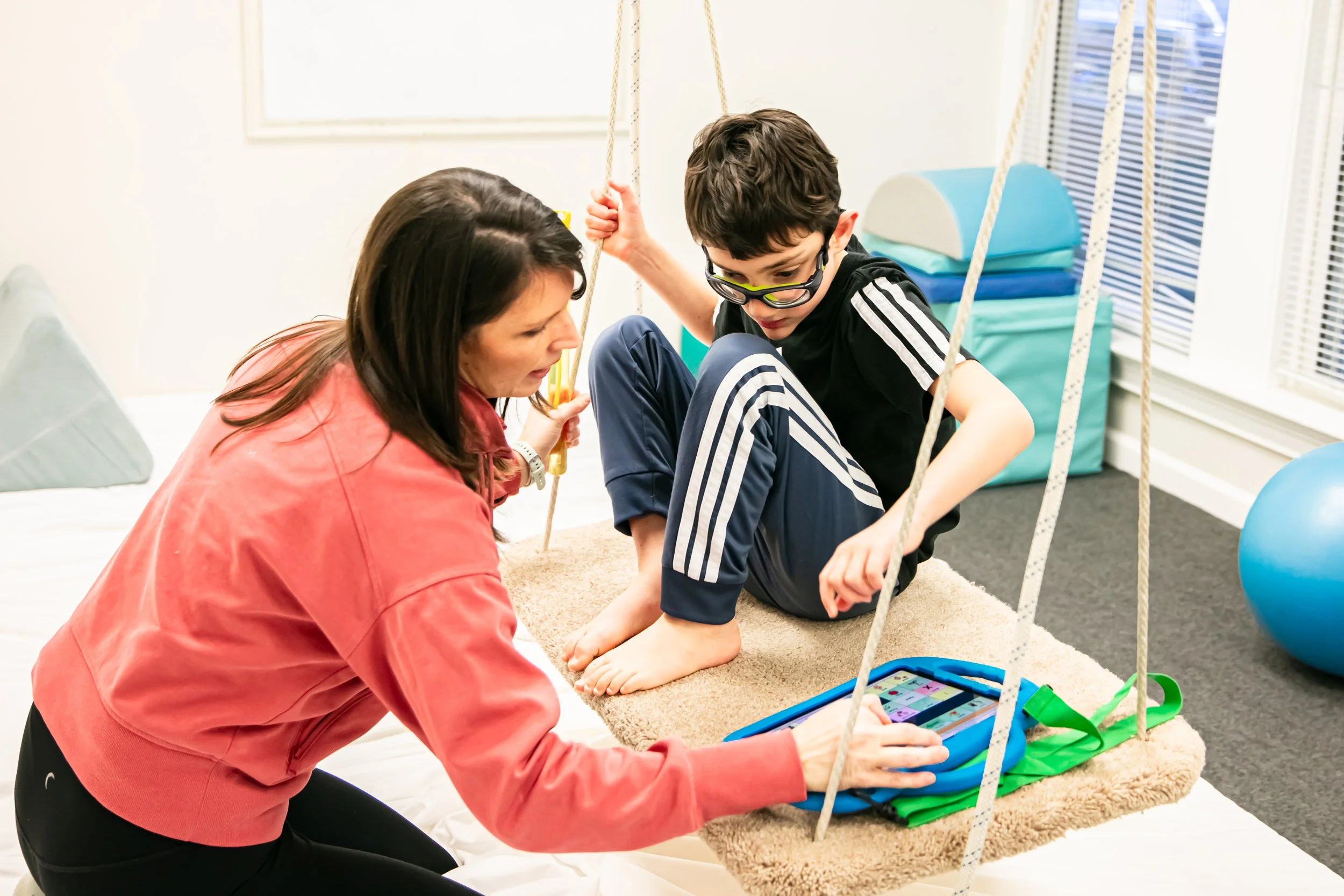
Our therapists use a combination of sensory integration, motor learning, and play-based strategies to support skill development.
Therapy is highly individualized to match each child’s strengths and goals.
-
OT may help children who become overwhelmed, struggle with transitions, seek constant movement, avoid or seek certain sensations, have coordination or handwriting challenges, or need support with attention, play, or peer interaction.
-
We support children with:
Speech delays
Language delays
Articulation and phonological disorders
Childhood Apraxia of Speech
Social communication challenges
Autism spectrum disorder
Receptive and expressive language difficulties
Feeding and oral motor concerns -
Children work one-on-one with their speech therapist while also having opportunities to interact with same-aged peers throughout sessions.
Therapy is intentionally designed to create natural moments for:
communication
conversation
peer interaction
language development
emotional regulation
play-based learning
We believe children communicate best when they feel regulated, connected, and engaged.
-
Our occupational therapists collaborate with speech, play, and ABA therapists to support the whole child. Parents are also an important part of the process.
-
Our speech therapists incorporate movement and sensory-based strategies throughout sessions to help support attention, participation, and communication.
By combining speech therapy with movement, play, and natural interaction, children can practice communication skills in ways that feel meaningful and useful beyond the therapy room.
-
Speech therapy may help children who:
are late to start talking
are difficult to understand
struggle to follow directions
have trouble expressing wants, needs, or ideashave difficulty with back-and-forth conversation
struggle to communicate with peers
need support with feeding or oral motor skills
need help building confidence in communication
Speech Therapy
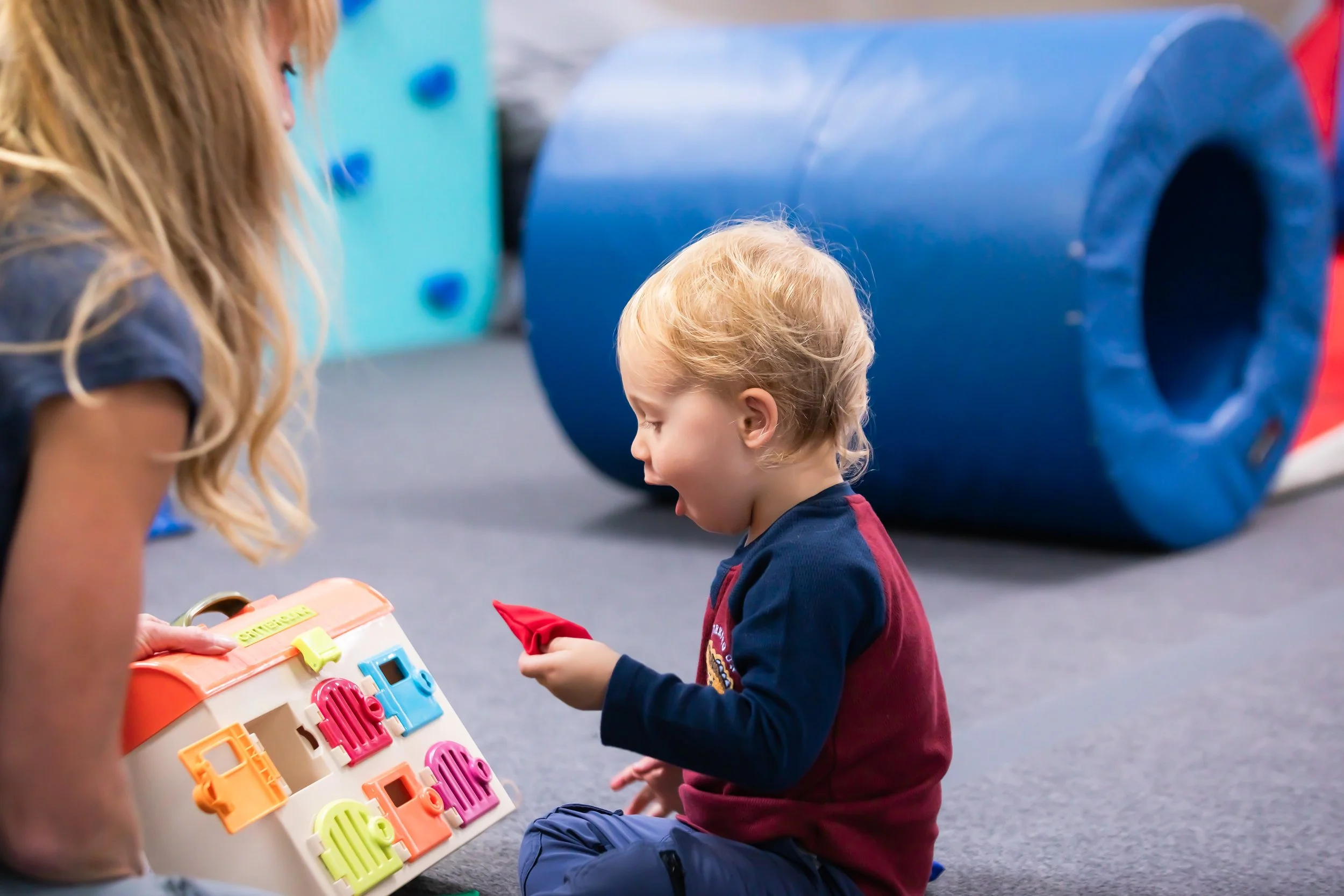
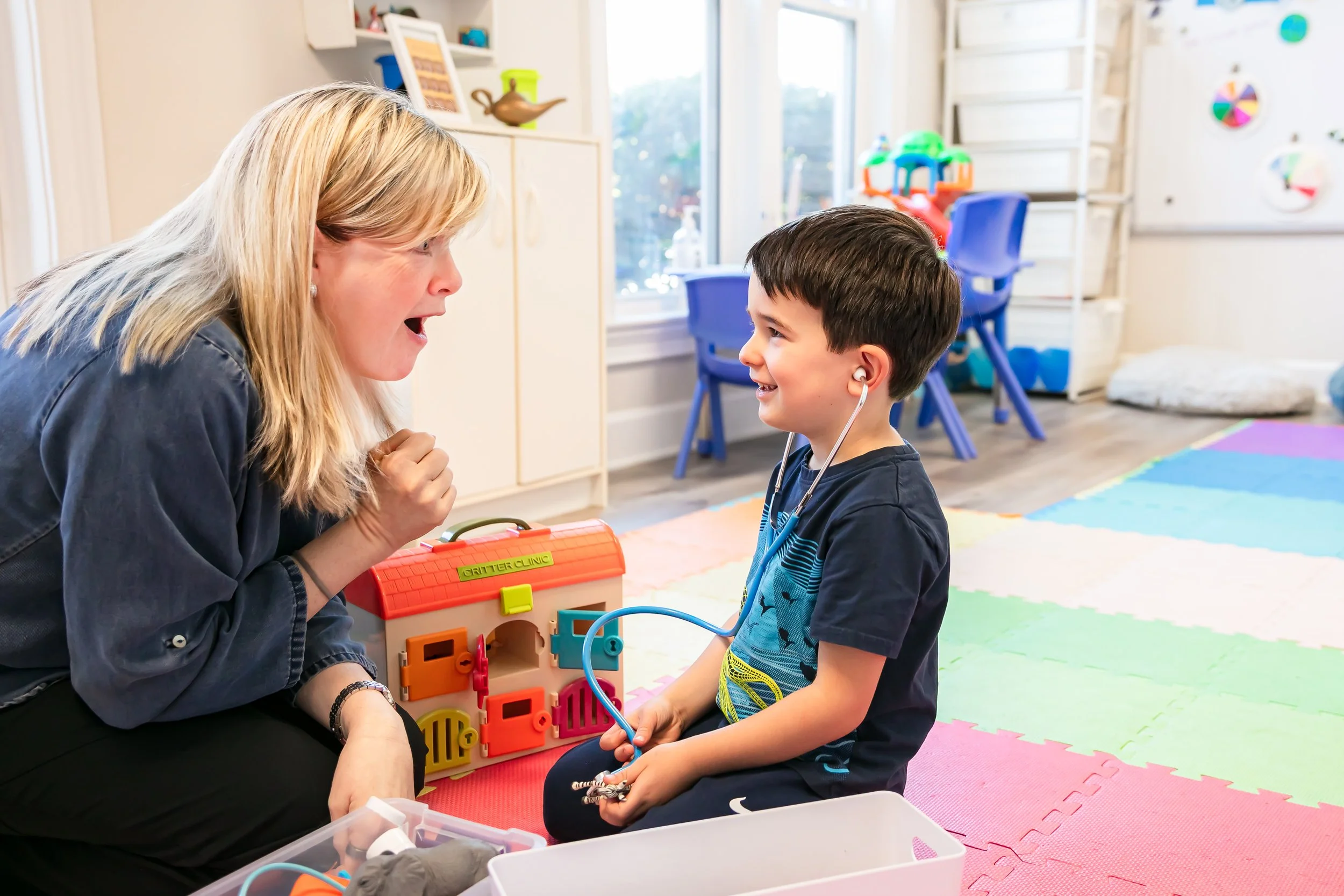
At Kids-N-Motion, speech and language therapy helps children communicate with confidence through connection, play, movement, and meaningful interaction. We focus on helping children build communication skills in ways that feel natural, engaging, and motivating — while supporting their ability to connect with others in everyday life.
Play Therapy & Counseling
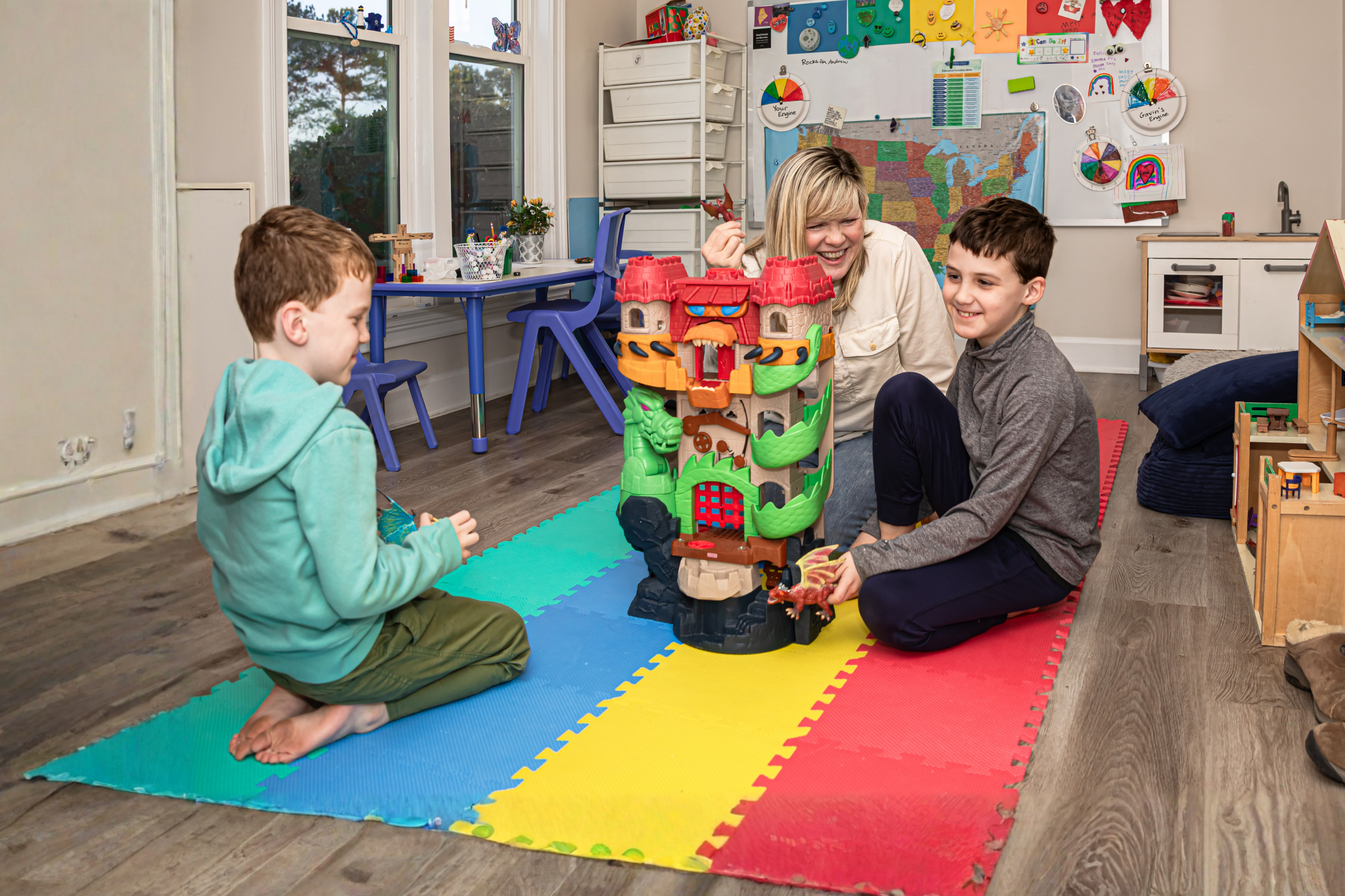
Play is a child's natural language. Through play therapy, children are able to express feelings, process experiences, build emotional awareness, and develop healthy coping skills in a way that feels safe and meaningful. Sessions are designed to meet children where they are while supporting emotional growth, confidence, and connection.
-
We support children with:
Emotional Regulation: Children learn to identify feelings, manage emotions, and develop strategies for handling challenges.
Anxiety & Stress: Play provides a safe way for children to process worries, transitions, and everyday stressors.
Self-Confidence: Children build self-awareness and confidence through supportive therapeutic relationships and successful experiences.
Relationships & Social Development: Play therapy helps children strengthen communication, perspective-taking, problem-solving, and relationship skills.
Family Changes & Life Transitions: Children can work through experiences such as divorce, grief, school challenges, sibling relationships, and other life changes.
-
Our play therapy services are relationship-based and child-centered. We draw from evidence-based approaches including DIR/Floortime, developmental, and play-based models while tailoring sessions to each child's individual strengths, interests, and needs. Therapy focuses on building connection first, creating the foundation for emotional growth and resilience.
-
Play therapists work closely with occupational therapists, speech-language pathologists, educators, and families when appropriate. This collaborative approach helps ensure children receive consistent support across environments and areas of development.
-
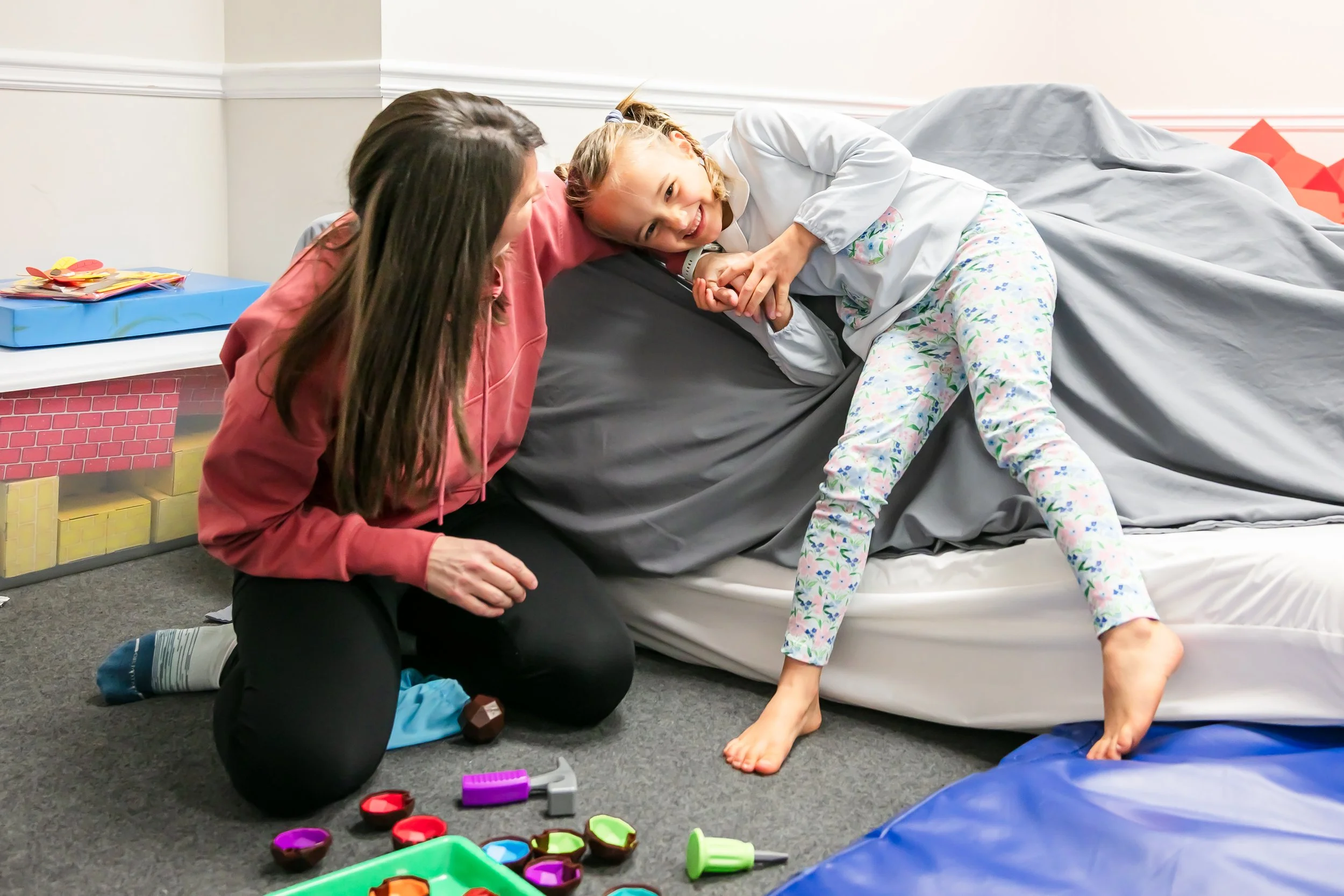
Children often communicate best through movement and play. Sessions may incorporate sensory experiences, movement activities, games, imaginative play, and shared interactions that support regulation, emotional expression, and relationship building.
-
Play therapy may be beneficial for children who:
Experience anxiety, stress, or emotional challenges
Have difficulty expressing feelings
Struggle with social relationships
Are navigating family or school transitions
Need support building confidence, coping skills, or emotional awareness
Applied Behavior Analysis (ABA) Therapy
Children learn best when they feel safe, understood, and connected.
We help them build communication, regulation, and social skills within everyday interactions and real relationships.
Our ABA services focus on helping young children participate more comfortably in daily life — expressing needs, adapting to change, engaging with others, and gaining independence.
We use evidence-based behavioral strategies within meaningful activities so skills develop in ways children can actually use beyond therapy. We offer ABA in the setting that best supports your child and family.
Home Based
ABA Therapy takes place within your child’s natural routines, helping skills integrate directly into family life.
School Support
We coordinate with teachers and classroom expectations so children can participate more successfully in their learning environment.
Clinic Based
ABA Sessions occur in a warm, exciting and interactive therapy space designed for guided play, social opportunities, and structured learning.
Our Half-Day Morning Program
Clinic-Based Option for ABA Therapy
For families seeking a consistent peer setting, we offer a small, supportive half-day program that feels similar to a preschool environment.
Children participate in:
guided play routines
group activities
cooperative games
communication opportunities
regulation supports
Because the program occurs inside a multidisciplinary clinic, families may choose to include occupational therapy, speech therapy, or play therapy services. When those services are added, therapists collaborate on strategies that ABA staff incorporate into daily goals and activities; improving outcomes and consistency of care. All children in ABA will receive a complete program focused on skill development, behavior, and social growth.
Ready to get started?
You don’t have to figure this out alone. We’ll talk through your concerns, answer questions, and help you decide next steps — even if therapy isn’t the answer right now.
Social Skills Groups
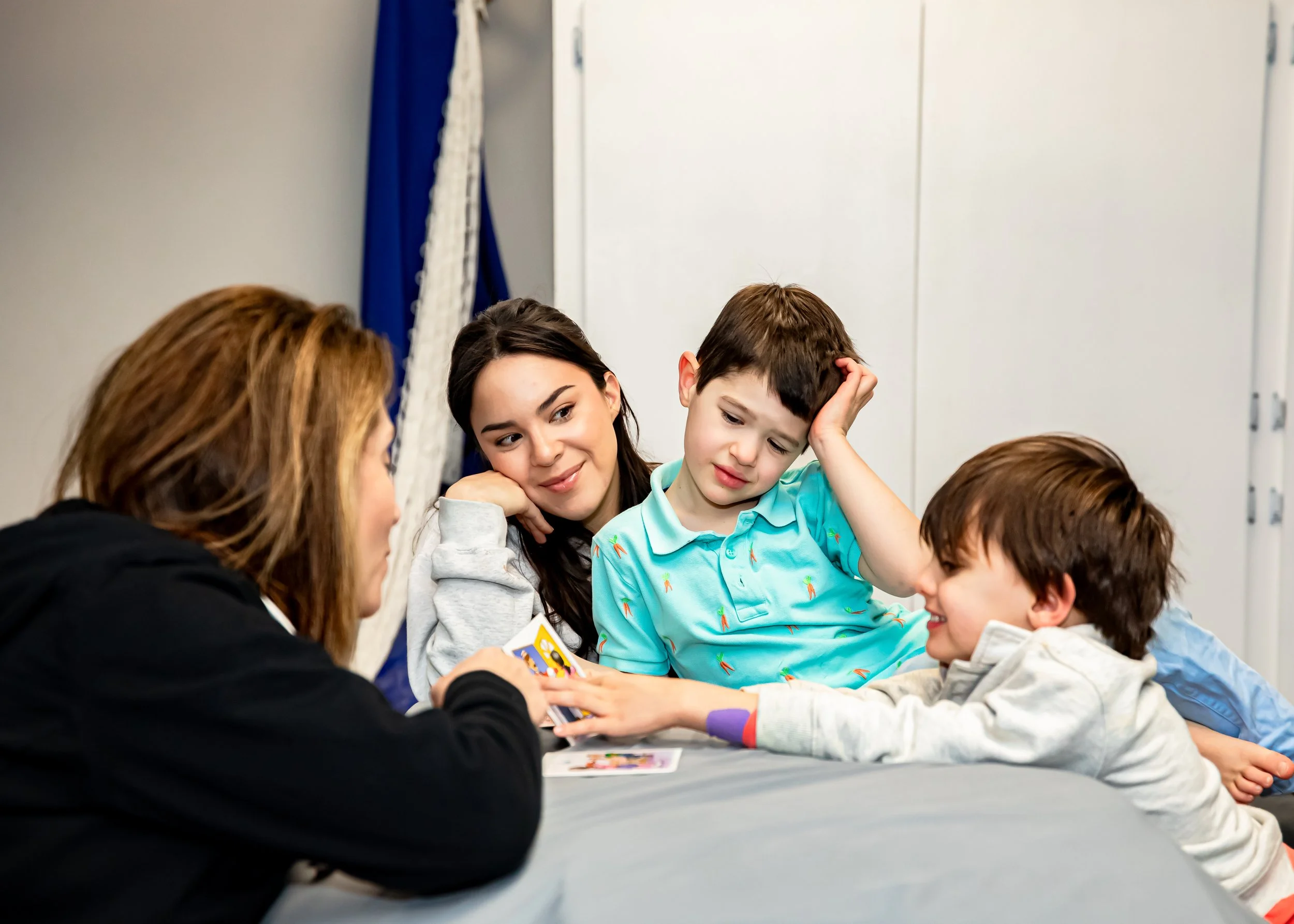
At Kids-N-Motion, social development happens naturally throughout the day. Most therapy sessions are intentionally scheduled alongside well-matched peers, creating opportunities to practice communication, connection, flexibility, and relationship skills in real-time. Whether children are learning to take turns, join play, navigate emotions, or build friendships, social growth is woven into meaningful interactions.
Turn Taking & Cooperative Play
Foundational social skills such as sharing, waiting, taking turns, and participating in activities with others.
Conversation & Communication
Groups provide opportunities to practice listening, responding, asking questions, and staying engaged in conversations.
Friendship Skills
Children develop confidence initiating interactions, joining peers, and building meaningful connections.
Emotional Awareness
Children learn to recognize emotions in themselves and others while practicing perspective-taking and empathy.
Sports & Group Activities
For children ready for more advanced challenges, groups may focus on teamwork, sportsmanship, flexible thinking, and navigating group dynamics.
Social skills are best learned through authentic experiences rather than worksheets or scripted activities. Groups are carefully matched based on age, interests, communication style, and developmental needs. Some groups may involve two children working on early social foundations, while others focus on more complex communication, emotional sharing, problem-solving, and peer relationships.
Our therapists collaborate across disciplines to support each child's social growth. Occupational therapists, speech-language pathologists, counselors, and other team members work together to address the communication, regulation, sensory, and emotional skills that contribute to successful peer interactions.
Children connect best when they feel regulated and engaged. Through movement, play, games, sports, and shared experiences, therapists help children build the emotional and physical readiness needed for meaningful social interactions.
Social skills groups may benefit children who:
Have difficulty making or maintaining friendships
Struggle with conversation or peer interactions
Need support with turn taking, flexibility, or teamwork
Feel anxious in social situations
Benefit from practicing skills in a supportive peer environment